Blue Veins in Hands: Why They Show and When to Worry

Medically reviewed by Rashmi Gulati, MD — Last updated: October 29, 2026

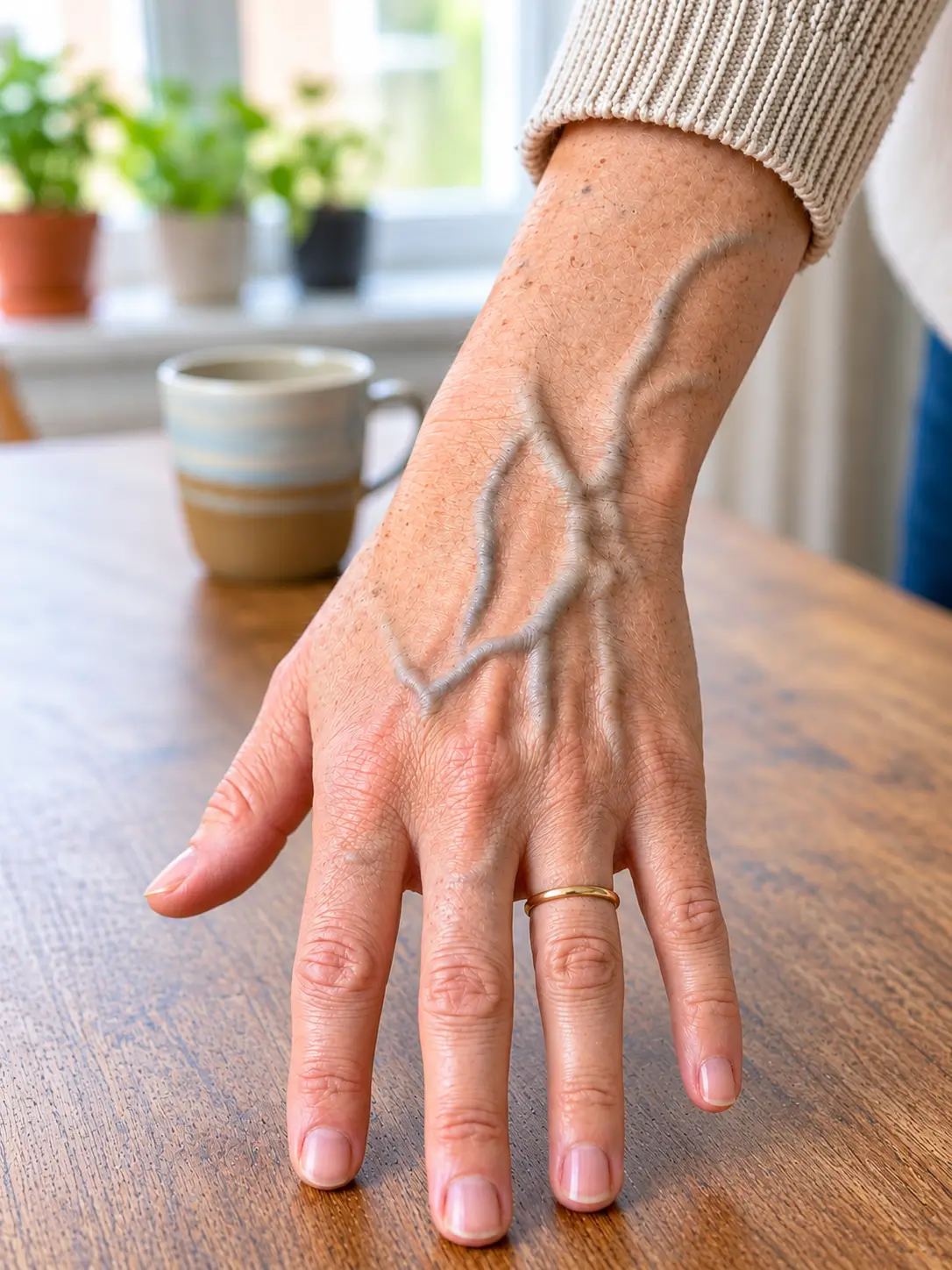
Seeing blue veins on the back of your hands, your wrists or even your palms is almost always normal. Thin skin, low body fat, age, heat and exercise all bring veins closer to view, and the blue color comes from how skin scatters light, not from blue blood. This guide explains each cause, the few signs that do need a doctor, and the options if you simply don’t like how your hands look.

Red

The color of the blood in your veins; the blue is an optical effect 

5–10%

Share of deep vein clots that form in the arm rather than the leg

63%

Hand patients improved after foam sclerotherapy in a 2023 study

Blue Veins in Hands
QUICK ANSWER

Why are the veins in my hands so blue?

Your veins aren’t blue; the blood inside them is dark red. Skin lets more blue light bounce back from just above a vein than red light, so veins close to the surface look blue. They show more when skin is thin or fair, body fat is low, you’re older, warm, or have just exercised. Visible veins alone aren’t a sign of disease. Pain, swelling, a hard red cord, or a blue tint to fingers or nails is different and needs a check.

AT A GLANCE

Most common causes

Thin or fair skin, low body fat, aging, heat, exercise, genetics

Why blue

Light scattering in skin; blood itself is always red

See a doctor

Pain, swelling, warmth, a hard cord, or bluish fingers or nails

Cosmetic options

Sclerotherapy, other vein procedures, or fillers to soften the look

Should you be concerned?

Signs your hand veins need a doctor

Veins that are simply visible, flat or slightly raised, and painless are not a medical problem. What matters is a change: a vein that suddenly hurts, swells or hardens, or color that spreads into the skin, fingers or nails.

Learn more about vein symptoms and what causes vein problems.

Normal causes

What causes blue veins on hands?

These everyday reasons explain nearly all visible hand veins. None of them needs treatment on health grounds.

Most common

Thin or fair skin

Less pigment and thinner skin let more light reach veins and bounce back, so veins look bluer and sharper. This is why veins often show more on fair skin.

Very common

Low body fat

Fat under the skin cushions and hides veins. Lean people, and anyone who has lost weight, see hand and forearm veins more clearly.

Very common

Aging

Skin thins and loses collagen and fat with age, especially on the back of the hand, so veins look larger and more raised even though they haven’t changed much.

Anti-aging care

Temporary

Heat and hot showers

In warm weather your body widens surface veins to release heat, so they fill and stand out. They shrink again when you cool down.

Temporary

Exercise and lifting

Working muscles need more blood, and gripping weights raises pressure in hand and arm veins. Veins can stay prominent in people who train regularly.

Normal test

Hand position

Let your hand hang down and veins fill; raise it above your heart and they flatten within seconds. Veins that behave like this are draining normally.

Normal

Veins in palms and wrists

The skin of the inner wrist and lower palm is thin, so blue veins there are common and normal. Searchers often worry about these; on their own they’re no cause for concern.

Runs in families

Genetics

How deep your veins sit and how thick your skin is are partly inherited. If a parent has prominent hand veins, you may too.

What are veins?

Temporary

Pregnancy

Blood volume rises during pregnancy, which can make veins in the hands, breasts and legs more visible. This usually fades after delivery.

When it's not just cosmetic

Conditions that can change hand and arm veins

These are uncommon, but they’re the reason to get a new, painful or swollen vein checked rather than waiting.

Superficial thrombophlebitis

A clot in a vein just under the skin, often after an IV line or injury. It causes a painful, red, warm cord. Usually not dangerous, but some people go on to develop a deep vein clot, so it should be checked.

Arm deep vein thrombosis

About 5–10% of deep vein clots form in the arm, most often linked to catheters or cancer. Swelling is the most common sign, with heaviness and visible veins across the chest and shoulder.

Effort thrombosis

Called Paget-Schroetter syndrome. Repeated overhead arm motion in swimmers, throwers or weight lifters squeezes the vein under the collarbone, causing sudden arm pain and swelling.

Raynaud's phenomenon

Cold or stress makes small finger arteries spasm, so fingers turn white, then blue, then red. It affects the skin’s color, not the veins, and needs a check if new or one-sided.

Cyanosis

A blue tint to skin, lips or nails from low oxygen. Unlike visible veins, it colors the skin itself. Sudden cyanosis with breathing trouble is an emergency.

Venous malformations

Soft, blue, compressible lumps present from childhood that can grow over time. They’re different from normal veins and are treated by specialists, often with sclerotherapy.

Normal or not?

Is it normal to see blue veins on your hands?

Match what you notice to what it usually means, and how quickly to act.

WHAT YOU NOTICE USUALLY MEANS WHAT TO DO
Blue veins on the back of both hands, no pain Normal anatomy, age, thin skin or low body fat Nothing needed; cosmetic options if they bother you
Veins visible in palms or inner wrists Thin skin in that area Nothing needed
Veins bulge in heat or after exercise, then settle Normal heat release and blood flow Nothing needed
One vein is red, hard, warm and tender Possible superficial thrombophlebitis See a doctor within a day or two
Whole arm or hand swollen, heavy or painful Possible arm deep vein clot Same-day medical care
Fingers turn white or blue in the cold Possible Raynaud’s phenomenon Book a visit to look for a cause
Blue lips or nails with shortness of breath Low blood oxygen (cyanosis) Call 911
How we help

How we evaluate visible hand veins

Four steps to tell normal veins from a problem, and to plan treatment only if you want it.

01

History and exam

When the veins appeared, any pain or swelling, recent IV lines, sports, medicines and family history, plus a look at both hands and arms.

Your first visit

02

Testing if needed

Most visible veins need no tests. A duplex ultrasound is used when a clot is suspected, and blood work when symptoms point to another cause.

Vein symptoms

03

Your options

Reassurance when veins are normal. If you want a cosmetic change, we review sclerotherapy, fillers and referral options, with their trade-offs.

Sclerotherapy

04

Follow-up

After any procedure we check healing and results, and treat any bruising or brown staining that appears.

Veins FAQs

Treatment options

How to make hand veins less visible

Normal hand veins never need treatment for health reasons. If they bother you, these are the options, and what to expect from each.

Leave them alone

The safest choice for healthy veins. Hand veins are also the easiest sites for IV lines and blood draws, which is worth keeping in mind before removing any.

Foam sclerotherapy

A solution injected into the vein makes it close and fade. In 41 patients treated on the back of the hands, 63% improved after an average of 1.5 sessions, with mostly mild, short-lived side effects.

Sclerotherapy in NYC

Dermal fillers

Filler placed under the thin skin of the back of the hand restores volume and makes veins less obvious without removing them. Some fillers are FDA-approved for this use.

Dermal fillers

Laser and surgical options

Larger hand veins can be closed with endovenous laser or removed through tiny incisions. These are specialist procedures with more recovery; we refer when they fit.

Getting rid of varicose veins


Skin care and sun protection

Sun damage thins skin and makes veins show more. Daily sunscreen on the hands and moisturizing help the skin itself, though they won’t hide large veins.

Skin conditions

What we don't recommend

Creams, supplements or “detox” plans sold to shrink visible veins. There’s no evidence they change how normal hand veins look.

Before you buy

Thinking about hand vein treatment? Check these first

Cosmetic hand vein procedures work best for healthy people with realistic goals. Go through this list before your consultation.

Rule out a problem
Know the trade-offs
Plan the timing
By the numbers

Hand veins: the key numbers

5–10%

Deep vein clots that occur in the arm instead of the leg

Up to 6%

Arm clots that travel to the lungs, vs. 15–30% from leg clots

1.5

Average foam sclerotherapy sessions for hand veins in a 2023 study

15%

Hand sclerotherapy sessions followed by a small, treatable clot lump (coagulum)

Why Patients Medical

Why patients choose us for vein concerns

50+ years of integrative care

Serving New York patients since 1974.

Honest reassurance

If your veins are normal, we tell you, and you don’t pay for treatment you don’t need.

Medical and cosmetic under one roof

Vein symptoms checked by physicians; sclerotherapy and fillers when you want them.

Physician-led

Medical doctors review clot risk and medicines before any procedure.

Whole-body view

We look at circulation, blood pressure and skin health together.

In person or telemedicine

Visits at 1148 Fifth Avenue, Manhattan, or by video for a first review.

YOUR CARE TEAM

Meet the doctor who reviewed this page

drrashmi

Rashmi Gulati, MD

Medical Director

Rashmi Gulati, MD, is a board-certified functional medicine doctor Manhattan and a leading holistic doctor in NYC.

stuartweg

Stuart Weg, MD

Holistic Pain Management Physician

Holistic pain management physician at Patients Medical, caring for patients with chronic pain and inflammation.

FAQS

Blue veins in hands: your questions

Still unsure? Call us at (212) 794-8800.

Usually nothing more than thin skin, low body fat, age, warmth or recent exercise bringing veins closer to the surface. They’re a normal finding unless they’re painful, swollen, hard or come with color changes in the skin.

Yes. Most adults can see some veins on the back of their hands, and they often become more visible with age as the skin thins.

The skin on the inner wrist and lower palm is thin, so veins there show easily. Blue veins in the palms are common and normal on their own.

Blood in veins is dark red. Skin scatters and absorbs light so that more blue than red light comes back from just above a vein, making it look blue.

Veins look darker when they’re wider (in heat, after exercise or with the hand hanging down), closer to the surface, or seen through fair, thin skin. Dark color alone isn’t a sign of poor circulation.

Common reasons are hot weather, a hot shower, exercise, weight loss or simply aging. A sudden change in one hand with swelling, pain or heaviness needs prompt medical review.

It’s uncommon. Hand veins can bulge and look twisted, especially with age, but true varicose vein disease mainly affects the legs. Painful or rapidly changing veins should be checked.

No. Visible hand veins don’t diagnose high blood pressure. The only way to know is to have your blood pressure measured.

Dehydration usually makes veins harder to see and harder to find for blood draws, not more visible.

Yes, with foam sclerotherapy or, for larger veins, laser or minor surgery done by specialists. Fillers can make veins less visible without removing them.

In a 2023 study, foam sclerotherapy on the hands caused mostly mild, short-lived side effects. It isn’t right if you have an active clot or are pregnant, and it removes a vein that could be used for IVs.

See a doctor if a vein becomes painful, red, warm or hard, if your hand or arm swells, or if your fingers or nails turn blue. Call 911 if blue skin comes with trouble breathing.

Yes. We evaluate vein concerns and offer sclerotherapy and dermal fillers at our Fifth Avenue office. Call (212) 794-8800 to book.

Begin Your Journey with Patients Medical

Patients Medical specializes in gently helping the patient identify the root cause of their medical issues and then assist them to recover from their problems to help them move forward to good health.

Request your consultation today!

To schedule an in person on Tele-medicine appointment, please call our office at (212) 794-8800 or email us at info@PatientsMedical.com We look forward to hearing from you

Our medical center in New York City.

Patients Medical PC
1148 Fifth Avenue, Suite 1B New York, NY 10128

Make an Appointment